

Canada, under pressure to spend more on its military, vowed on Monday to boost funding for the armed forces and hit NATO's two per cent military spending target this fiscal year, five years earlier than promised.
Leftist/globalist Prime Minister Mark Carney also said Canada was likely in future to devote a greater percentage of GDP on defense, given the need to replace outdated equipment and reduce its heavy reliance on Washington.
"Now is the time to act with urgency, force, and determination," Carney said in a speech in Toronto, reiterating promises to work more closely with Europe's defense industry.
The United States and other NATO allies have complained for years about what they see as the inadequate level of Canadian military funding. Ottawa spends about 1.4 per cent of its gross domestic product on defense.
Pete Hoekstra, the US ambassador to Canada, said Washington was thankful for the new commitment.
"This makes the alliance stronger, allows us to put in place the things that we need to have in place to keep the world a safer place," he told CBC News.
The Liberal Government plans to meet the two per cent target by spending an additional CA$9 billion ($6.6 billion) this fiscal year. The money will go toward increasing recruitment, repairing equipment and forging new defense relationships.
"We think that this proportion of spending relative to GDP is going to go up somewhat," Carney later told reporters.
Pressed as to how Canada could afford this at a time of rising budget deficits, Carney cited efforts to cut spending while ruling out tax cuts.
Reuters reported last month that NATO chief Mark Rutte had proposed alliance members should boost defense spending to 3.5 per cent of GDP and commit a further 1.5 per cent to broader security-related spending to meet a US demand for a five per cent target.
Carney won the April 28 election on a promise to stand up to US President Donald Trump's tariffs and also to reduce the country's military reliance on Washington.
Randall Bartlett, Deputy Chief Economist at Desjardins, said the extra spending would increase the budget deficit beyond the roughly CA$60 billion Carney's election platform promised.
"If the government aims to increase defense spending to 3.5 per cent of GDP by 2030, the deficit will only keep increasing," he said.
Carney said another reason for Ottawa to act was what he called the decision by the United States to gradually withdraw from the concept of collective security.
"A new imperialism threatens. Middle powers compete for interests and attention, knowing that if they are not at the table, they will be on the menu," he said.
The previous Liberal Government last year formally committed to hitting the NATO target by 2032. During the election campaign Carney pledged to get to two per cent by 2030.
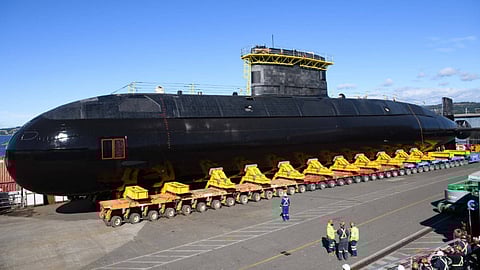
Canada will boost pay for service members and buy new submarines, aircraft, ships, armored vehicles and artillery, as well as new radar, drones and sensors, Carney said, without giving details.
(Additional reporting by Nilutpal Timsina in Bengaluru and Promit Mukherjee in Ottawa; writing by David Ljunggren; Editing by Rod Nickel)
