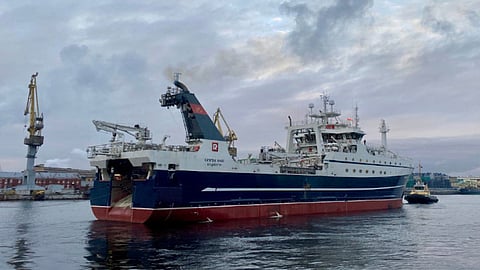
An investigation by British newspaper The Telegraph has identified 17 Russian trawlers involved in more than 500 incidents of loitering over submarine cable routes, or following them for substantial distances, around the cables connecting Britain with the US and continental Europe.
The analysis, published on October 21, compared Global Fishing Watch vessel-tracking data collected since 2021 with nautical charts of cable routes and identified repeated low-speed movements close to charted cable positions.
The newspaper assessed that these could represent efforts to map precise cable locations for possible future interference.
Russian fishing vessels accumulated 337 hours above the Atlantic Crossing 1 cable north of Scotland, 322 of them during April 2023.
One trawler spent 113 hours over about four years near nine different cables linking Western Europe with the US. In one April 2023 pass, it made 10 course changes while covering a 25-kilometre section of Atlantic Crossing 1.
In February 2025, a second vessel repeatedly crossed the trans-Atlantic Hibernia Express cable. During one manoeuvre, it spent 42 minutes near the cable at under two knots.
Naval personnel consulted by the newspaper said such low-speed operations could suit sonar surveying or the deployment of underwater vehicles operated remotely. They also said storage aboard one trawler could carry unmanned equipment.
Britain has 64 active subsea telecommunications cable systems, which carry about 99 per cent of its international data traffic. In September, officials described a joint British, Norwegian and US operation near Svalbard that disrupted a Russian exercise involving cable-disabling technology.

