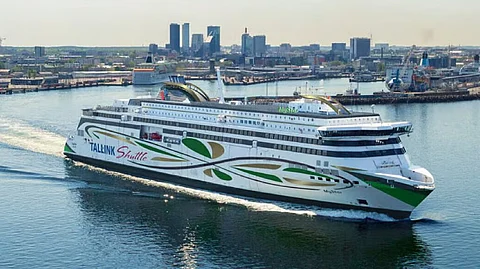

The Estonian Government has taken nearly €10 million (US$11 million) in annual passenger shipping aid out of its 2027–2030 budget strategy, prompting local operator Tallink and the Seamen’s Independent Union of Estonia to warn that vessels and jobs could move abroad.
The government approved the strategy and the 2027 state budget draft on September 28. The measure had remained in the forward spending plans after parliament rejected it in 2025.
Tallink CEO Peep Jalakas said the withdrawal makes reflagging more likely, although the company would not rush a decision.
“This could put both jobs and the long-term future of Estonia's maritime sector at risk,” Jalakas told local public broadcaster ERR.
He said the company regularly considers moving vessels away from the Estonian flag but declined to quantify the likelihood of doing so.
“Fuel costs, particularly for marine fuels, have nearly doubled compared with the beginning of the year,” said Jalakas.
The passenger shipping sector has also faced carbon taxes since the start of the year, adding millions of euros to Tallink’s costs, he added.
Jüri Lember, head of the union, estimated that reflagging one vessel could cost Estonia around €10 million in annual tax revenue.
Infrastructure Minister Kuldar Leis said Estonia is pursuing state aid clearance from the European Commission for a different programme to support companies using more environmentally friendly fuels.
“If we receive that approval, the plan is to once again seek funding from the state budget for the following years,” Leis said. He put the anticipated annual amount at about €10 million.
The 2027 budget draft forecasts a deficit of four per cent of gross domestic product.
“In every area, we have to cut back on the one hand while looking at how to remain competitive on the other,” Leis said.
The support was introduced in 2020, when Covid-19 border closures brought regular passenger transport to a halt. In August 2025, the Ministry of Climate announced a €2 million (US$2.2 million) allocation for passenger shipping companies, initially covering support through the end of that year.
“This proposal was initially approved in the coalition agreement, we also had state aid approval for it, and we would have had the funds – but at the last moment, a political agreement was not reached.” Marten Kokk, then secretary-general of the Ministry of Climate, told ERR in December 2025.
Reform MP Mart Võrklaev opposed the subsidy.
“The pandemic is over, the company is once again profitable, and therefore spending taxpayer money is no longer justified,” Võrklaev said.
Lember said in December 2025 that the ferry Victoria had been operating at a loss on the Tallinn–Helsinki route because of insufficient cargo and passenger flows.

