
A study published this week summarises the results of a 10-year tagging programme called the Tagging of Pacific Predators (TOPP). The researchers found that two stretches of the North Pacific Ocean are luring a range of marine predators in predictable seasonal trends.
Ian Jonsen, a research associate and adjunct professor in the Department of Biology at Dalhousie University and co-lead investigator of the Future of Marine Animal Populations Project (FMAP), and lead author of the study Barbara Block at Stanford University as well as several other US researchers concluded a two-year study titled Tracking apex marine predator movements in a dynamic ocean, published in Nature.
Under the TOPP programme, 4,306 tags were deployed on 23 species in the North Pacific Ocean, yielding data that covers 265,386 days.
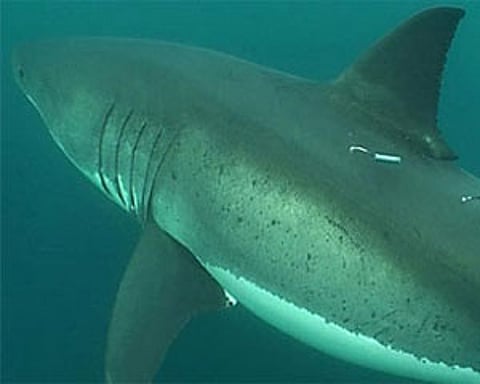
TOPP researchers have been tagging marine predators – species like sharks, whales, tuna, seals and marine turtles – for a decade. The animals are caught, tagged with an electronic device that tracks their location and released; their movements are then monitored by scientists at several California institutions.
Jonsen helped synthesise that data over the last two years.
"We wanted to be able to build a story on behalf of these marine predators. Tagging allows us to answer questions like, 'where are they going?', 'how long are they there for?', and 'how long does it take them to get there?' By tracking the movements of marine predators, we can build a map of the important 'traffic routes' in the ocean, something we haven't been able to do until now," he explained.

The scientists discovered that species like tunas, sharks, salmon and sea turtles have made the California Current large marine ecosystem a significant habitat. Also, that these species are predictable in their migrations and time them to arrive in the current when it is most productive.
The findings show critical locations for the predators in the California Current, which runs south along the country's west coast, and a trans-oceanic migration artery called the North Pacific Transition Zone, which links the western and eastern Pacific on the border between cold sub-arctic and warmer subtropical waters, reported RedOrbit.
"These are the oceanic areas where food is most abundant, and it's driven by high primary productivity at the base of the food chain – these areas are the savanna grasslands of the sea," the authors wrote. "Knowing where and when species overlap is valuable information for efforts to manage and protect critical species and ecosystems."
The study also indicates that predators such as the leatherback turtle travel back and forth from Indonesia and Monterey Bay, California each year, "like clockwork."
TOPP and FMAP were both projects conducted under the recently completed Census of Marine Life programme.
