On July 25, 2009, during the second meeting of the transport ministers of the South Asian Association for Regional Co-operation (SAARC), it was decided that the much awaited ferry service between India and Sri Lanka across the Palk Straits would be revived.
The previous ferry service was abandoned in the early 1980s due to the fear of illegal immigration, smuggling of arms and drugs and money laundering during the civil war period.
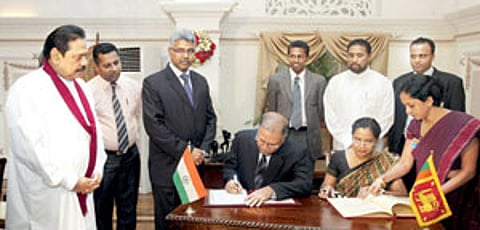
In January this year, a memorandum of understanding was signed by Sujatha Cooray, secretary to the Lankan Minister of Ports and Highways, and the Indian High Commissioner Ashok. K. Kantha, in the presence of Sri Lankan President Mahinda Rajapakse, to re-open the route.
The neighbouring countries expressed hope that, "This ferry service which is a cheaper mode of travel will operate effectively, prove commercially viable, strengthen sea traffic, revive two-way tourism and promote people-to-people contacts, thus strengthening the 3,000 year old traditional bond between India and Sri Lanka."
The ferry service will initially operate three times per week carrying 300 passengers at a time, at a fare roughly one-third the price of the equivalent airfare. The journey of 151 nautical miles is expected to take around 12 hours.
If demand is strong, a second vessel may be introduced, along with overnight services. Currently, around 100,000 Sri Lankan tourists visit India annually by air, and this number is expected to increase substantially when the ferry service resumes.
The Shipping Corporation of India (SCI) has been appointed to choose a qualified operator. Meanwhile, the Indian port of Tuticorin is investing US$500,000 in infrastructure improvements, and Colombo has said facilities on its side would be ready by mid-2011.
Hilwiah Roche

