

The Trump administration is pressing ahead on Wednesday with an effort to encourage US exploration of the deep sea by accelerating permitting for companies hunting for critical minerals in international waters.
The effort could help spark a US-led scramble for resources at the deep seabed before global standards covering the relatively new mining techniques are in place.
A newly finalised rule from the National Oceanic and Atmospheric Administration follows the signing of an executive order by US President Donald Trump that was aimed at bolstering the deep-sea mining industry as part of a push to counter China's sweeping control of critical metals.
Under the rule, US officials will consolidate the licensing and permitting process into a single and ostensibly shorter review, according to a government press release that was seen by Reuters.
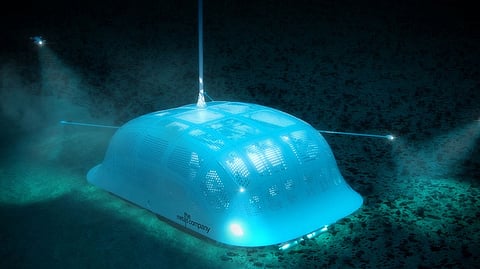
Last year, Canadian miner The Metals Company started the process to obtain such exploration licenses and permits, advancing its bid to become the first company to gain approval to develop deep-sea minerals.
"This new rule represents a meaningful modernisation of the US regulatory framework for deep seabed nodule collection and acknowledges the significant advances the industry has made since the US regime was first established," Gerard Baron, CEO of The Metals Company, said in a Wednesday press release.
Parts of the Pacific Ocean and elsewhere are believed to contain large amounts of potato-shaped rocks known as polymetallic nodules filled with the building blocks of electric vehicles and electronics, including nickel, copper and cobalt.
Questions remain about how the regulation of the industry will move forward.
Trump's order directed his administration to expedite mining permits under the Deep Seabed Hard Minerals Resource Act of 1980 and to establish a process for issuing permits along the US Outer Continental Shelf.
The International Seabed Authority - created by the United Nations Convention on the Law of the Sea, which the US has not ratified - has for years been considering standards for deep-sea mining in international waters. But it has not finalised them due to differences over acceptable levels of dust, noise and other factors from the practice.
Any country can allow deep-sea mining in its own territorial waters - roughly up to 200 nautical miles (370 kilometres) from shore - and companies are already lining up to mine US waters.
Deep-sea mining supporters have said the practice would lessen the need for large mining operations on land, which are often unpopular with their host communities. Environmental activist groups have called for the activities to be banned, alleging that industrial operations on the ocean floor could cause irreversible biodiversity loss.
(Reporting by Trevor Hunnicutt; additional reporting by Ernest Scheyder; editing by Thomas Derpinghaus and Franklin Paul)
