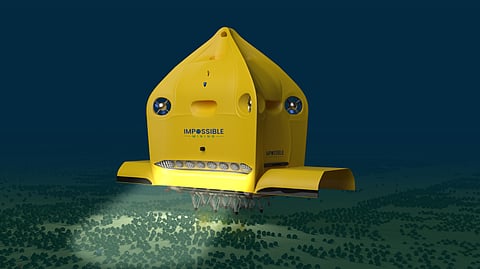

Deep-sea mining firm Impossible Metals said on Monday it has successfully tested an autonomous robot that uses AI to selectively retrieve critical minerals at depths of more than 4,000 metres (13,123 feet) in the Pacific Ocean.
Parts of the ocean seabed contain potato-shaped rocks known as polymetallic nodules filled with copper, nickel and other minerals used in electric vehicles and electronics.
Many companies in the nascent industry plan to use a vacuum-like device to retrieve those nodules, sparking controversy from environmental activists.
Impossible Metals, which is backed by Y Combinator, has developed a robot with a large claw that it says uses artificial intelligence to avoid aquatic life and reduce environmental impacts.
The test was part of a scientific expedition in September. The robot directed itself to the seabed, retrieved about 450 grams (one pound) of nodules and then returned to the surface.
Results from the test will be used to develop a larger version of the robot. The company still needs regulatory approval from the International Seabed Authority or the US Government.
Separately, Impossible Metals said that the family of FedEx founder Fred Smith had participated in the company's Series A funding round, which closed earlier this year.
The company declined to provide the value of the round, but media reports put it near $25 million, an amount that values the company at roughly $110 million.
Richard Smith, a FedEx executive and vice chairman of FWS Enterprises, the Smith family office, said it was Impossible's technology that drew him in.
"It very responsibly, in an ecologically friendly way, goes down there and plucks these nodules off the seabed floor without disturbing the environment," said Smith, who declined to provide the value of the investment but said it was "substantial."
The Smith family is now Impossible's second-largest shareholder.
(Reporting by Ernest Scheyder in Houston; Editing by Bill Berkrot)