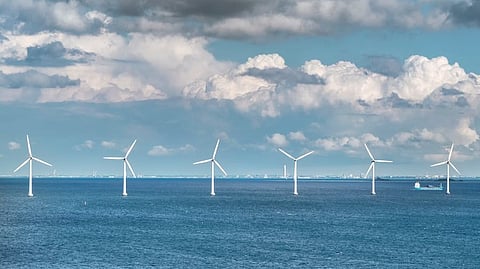


The Middle East war is giving fresh momentum to Europe's push for energy independence and bolstering the case for offshore wind farm developments, the CEO of Denmark's Orsted said on Thursday.
Europe, a major importer of fossil fuels, has seen energy prices soar in recent weeks as the US-Israeli war on Iran, and Tehran's blockage of shipments through the Strait of Hormuz, led to a worldwide scramble for oil and natural gas.
"There is a major task for Europe...in ensuring the necessary energy security, sovereignty and competitiveness," Orsted CEO Rasmus Errboe told Reuters on the sidelines of the company's annual meeting of shareholders.
"(This) naturally also affects us, because we produce renewable energy and because our focus is on Europe," Errboe said.
Orsted, the world's biggest offshore wind developer, struggled in recent years with soaring costs, and said last year it would focus more on Europe amid resistance to wind power in the US from President Donald Trump.
In January, nine European governments committed to tender up to 300 gigawatts (GW) of offshore wind capacity by 2050 — eight times the current volume of 38 GW.
France last week launched tenders for 12 GW of renewable energy, including seven offshore wind projects totalling 10 GW. While long planned, Finance Minister Roland Lescure said the projects would help wean France off imported oil and gas.
This, however, would entail taxpayer-funded subsidies, raising questions about long-term affordability and reliance on public support.
BofA Global Research last week raised its recommendation on Orsted's shares to "buy" from "neutral" and said the Middle East war will create momentum for fossil fuel independence in Europe, making offshore wind a key potential beneficiary.
(Reporting by Stine Jacobsen, editing by Louise Rasmussen, Terje Solsvik, Baird Maritime)
