
Norway's parliament on Tuesday ordered the government to review its planned subsidy for the country's first commercial floating offshore wind farm, raising concerns of a full development stop and a wider impact on "energy transition" projects.
A proposal by the opposition Conservative Party seeking financial scrutiny of a NOK35 billion ($3.70 billion) subsidy for floating wind was supported by the Progress Party, the Christian People's Party, and the Red Party.
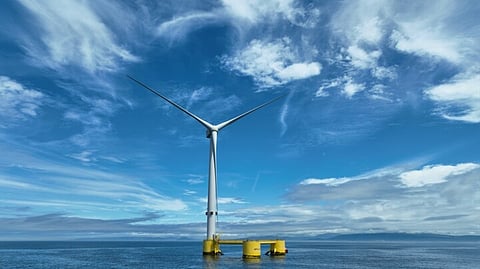
The minority government wants to support the construction of a 500 megawatts (MW) project at Utsira Nord off Norway's south-west coast, with two groups cleared to develop projects and enter a competition for subsidies in 2028-2029.
The Conservative Party in a parliamentary debate argued that the funding agreed as part of a budget deal in 2024 lacked a thorough review of whether it would yield the desired results.
But the review mandated by parliament was a risk to both ongoing and future projects, sowing uncertainty among investors, the energy minister and industry representatives warned.
"If the offshore wind investment stops now, it is entirely the fault of the Conservative Party and the Progress Party that Norway is losing electricity, industrial activity and jobs," Energy Minister Terje Aasland told Reuters by e-mail.
Norway, a major oil and gas producer, is seeking to sharply increase its renewable energy output in the coming decades to meet rising demand as more industries "decarbonise" their operations. Offshore wind is also seen as a technology pivot for supplier industries that still mainly serve oil and gas projects.
However, its economics remain heavily reliant on taxpayer-funded subsidies and guaranteed prices rather than standalone market viability.
Renewable energy and industrial development have become major flashpoints in Norwegian politics.
Earlier this year, opposition parties sought to block an ongoing electrification project at the Hammerfest liquefied natural gas (LNG) plant, although the motion was narrowly defeated.
(Reporting by Nora Buli, editing by Terje Solsvik, Baird Maritime)
