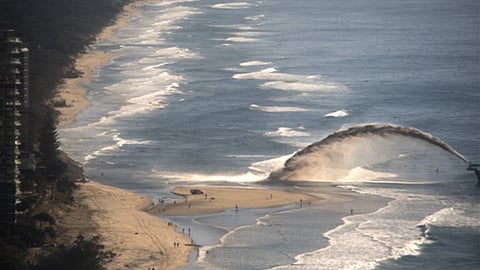

The dredger Trud R is due to depart the Gold Coast in Queensland, Australia, this week after placing about 1.2 million cubic metres of sand across the city's beaches during a six-month period.
The City of Gold Coast said on Thursday, October 8, that the vessel completed 1,156 deliveries between April and October. Volumes placed included 797,740 cubic metres at Miami and Mermaid Beach, 231,164 cubic metres at Surfers Paradise and 36,702 cubic metres at Main Beach.
The campaign brings the total volume of sand returned to Gold Coast beaches since Tropical Cyclone Alfred to almost three million cubic metres. The city estimates its beaches lost about four million cubic metres of sand when the cyclone struck in March 2025.
The city said some of the newly placed sand remains just offshore, where it dissipates wave energy and provides a buffer against erosion. Some of it is expected to move onshore and join the existing beach under calmer conditions.
"The additional sand has improved the resilience of these beaches to erosion and will provide greater protection during future storm events," said Gold Coast Mayor Tom Tate.
The Australian and Queensland Governments covered the full cost of the dredging through the disaster recovery funding arrangements.
Offshore dredging forms part of a wider restoration programme that also involves returning sand through backpassing, scraping and reprofiling beaches, and restoring dunes.
Earlier work under the programme included the Surfers Paradise Sand Backpass System, which moves sand from The Spit through a 7.8-kilometre pipeline to Main Beach, Narrowneck and Surfers Paradise.

