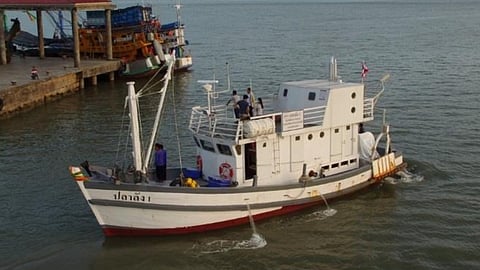

Thailand’s maritime industry stands at a critical crossroads. Commercial fishing groups nationwide have launched a movement urging political parties to adopt "fisheries structural reform" as a flagship policy for the upcoming election, hoping to unlock a decade of systemic stagnation.
For years, the Thai fishing industry has weathered a perfect storm. In 2015, the European Union issued a "yellow card" warning regarding illegal, unreported, and unregulated (IUU) fishing. This forced the Thai Government at the time to expedite the 2015 Fisheries Royal Ordinance to address international concerns.
However, many fishermen argue that these measures were a "fundamental misstep." By prioritising international diplomacy over the practical realities of those at sea, the over-regulation led to the near-collapse of the industry. Countless families lost their livelihoods.
While recent parliamentary efforts in early 2023 attempted to amend some of these laws, progress was halted by political transitions and the subsequent dissolution of Parliament.
The cornerstone of the current campaign is the demand for a dedicated "Department of Marine Fisheries," distinct from the existing administrative structure.
The rationale is clear: for over 30 years, management has been dominated by officials specialising in freshwater aquaculture. Proponents of the split argue that the principles of managing freshwater and marine resources are fundamentally different.
The lack of "deep expertise" in marine resources and commercial seafaring is cited as the primary reason why past solutions have failed to yield meaningful results.
To restore the industry to its former glory, stakeholders have summarised four key proposals for the next government:
1. Establish a department of marine fisheries to create an agency that truly understands the specific context of Thailand’s seas.
2. Consolidate scattered regulations into a single, transparent, and fair "fisheries code."
3. Revitalise the Marine Fisheries College to train a new generation of professionals with specialised skills and familiarity with international standards.
4. Launch a fisheries development fund to provide a revolving fund for technological upgrades and to assist fishermen in adapting to modern requirements.
This election represents a "golden opportunity" for Thailand’s fishing community. They hope the incoming administration will have the courage to reform outdated structures and breathe life back into an industry that was once a primary pillar of the nation's economy.

