

Peru's economy expanded 1.75 per cent in June compared to the same month last year, slowing from the prior month, data from its INEI statistics agency showed on Saturday, as natural climate patterns continued to affect the farming and fishing sectors.
June's data landed just below the 1.8 per cent growth recorded in May, when officials said activity was affected by the El Niño weather pattern that has warmed Pacific waters, increasing rainfall and pushing fish into deep waters.
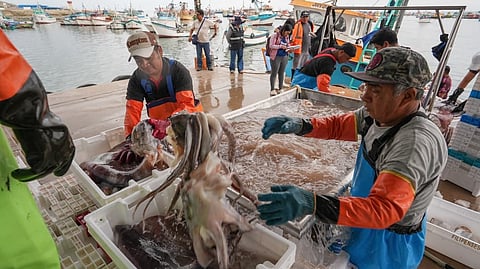
Farmers and fishermen were the worst hit, as their sectors' activity in June shrank eight per cent and 52 per cent from June 2025, respectively, while manufacturing also shrank more than six per cent and mining declined more than two per cent. Peru is the world's third-largest copper producer.
Activity in certain sectors was almost wiped out compared to levels a year earlier, including Peru's olive farmers and anchovy fishermen, who were hit by a temporary fishing ban due to weather changes driven by the cyclical weather phenomenon.
The rest of Peru's economy, however, expanded, notably its construction sector. During the six months through June, the economy grew 3.05 per cent.
Earlier this month, Peru's Economy Minister Elmer Cuba raised 2026 growth forecasts to 3.5 per cent from 3.2 per cent despite challenges likely to be presented by El Niño.
The data marks INEI's first GDP publication since President Keiko Fujimori was sworn in on July 28. Ratings agency Moody's has said it expects the conservative leader's victory to boost investor confidence.
On Friday, Fujimori announced short-term fuel subsidies for drivers working in cargo and passenger transportation in an effort to offset higher costs that have set off protests in part of the country.
(Reporting by Sarah Morland, Marco Aquino and Luis Jaime Acosta; Editing by Sanjeev Miglani)
