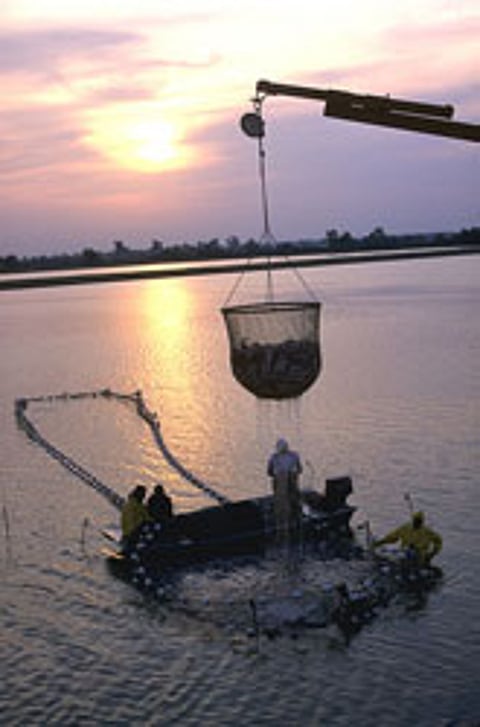
The Director of Fisheries at the Nigerian Federal Ministry of Agriculture and Water Resources, AV Amire, has said that the government has realised that in order to ensure self sufficiency in fish production, there would be a need to develop aquaculture.
Mr Amire said this at a workshop on fingerling production last week which took place at Monick Catfish Farm in Abia State.
Nigeria, like many other African countries, has abundant resources but is spending lots of money importing fish. The country spends an estimated US$340 million per year to meet the shortfall on demand.
The Nigerian Federal Government is now encouraging fish farmers to master the art of fingerling and hatchery in an attempt to boast fish production, which is at 600,000 tonnes per year against 2.66 million tonnes required per year.
Through the New Partnership for Africa Development (NEPAP) the Nigerian Government is also implementing some fishing programmes aimed at improving fish production.
Nigerian President Umar Musa Yar'Adua is said to have set up a policy and institutional framework to reduce huge import bills on fish by promoting local production.
Despite these efforts, analysts say fish farming in Nigeria is yet to make an impact because of the political situation which hampers the development of the sector.
Raphael Mweninguwe
