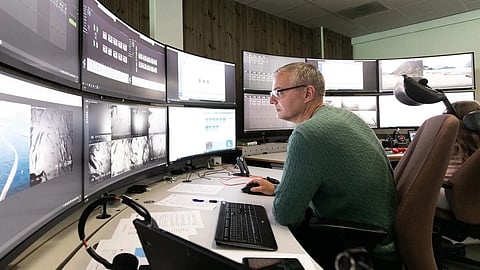

Mowi has said aquaculture companies are adopting automation and artificial intelligence without a common strategy for collecting, standardising and sharing the data generated by those systems.
Arnt Mjøen, Mowi’s IT director for Norway, made the assessment at a digitalisation seminar organised by Fiskeri- og havbruksnæringens forskningsfinansiering (FHF) at Gardermoen on Monday, September 14.
“We now have advanced cameras, laser-based lice removal, submerged and closed-containment technology, and artificial intelligence being used in more and more areas,” Mjøen said. “That is all well and good, but do fish farmers have a comprehensive and strategic plan for how we should collect and use our data? No, we clearly do not.”
FHF said seafood companies produced large volumes of information through sensors, cameras, specialist systems and environmental monitoring. Much of that information remained divided among participants and systems that could not communicate with one another.
Mjøen said Mowi’s review of its digital maturity found fragmented systems, manual processes and limited use of real-time information in operational decisions. This left the company dependent on employees with specialist knowledge to resolve problems.
Aquaculture had progressed from smaller operations producing little data to larger, automated processes, including autonomous systems supported by AI, he said. Mowi wants to use the resulting information to improve operational control and introduce measures earlier.
Mjøen said Mowi was prepared to share data where doing so had a defined purpose. Any industry-wide system would need to be secure and neutral, with clear ownership. Roles, responsibilities and mandates would also have to be settled alongside applicable legal principles.
He also called for clear rules governing AI, saying adoption would accelerate faster than many expected.
The seminar brought together seafood companies, technology suppliers, researchers and public administrators to discuss barriers and priorities for a shared aquaculture data area.
Anders Storebø, who is responsible for digitalisation in Lerøy Seafood Group’s aquaculture division, told the seminar that suppliers, regulators and other participants used different methods to store and exchange data, preventing the industry from using a common data language.
Storebø said fish farmers should press suppliers to develop standardised interfaces for the whole industry rather than systems tailored to individual companies. He also called for higher-quality data that could create value across the sector.
Lerøy has begun addressing data sharing through contracts that provide for its information to be shared through a standardised platform not tailored to the company, Storebø said. He said this approach could reduce the burden on smaller suppliers that spend disproportionate amounts of time providing data to different customers.
Storebø said Lerøy had previously worked with AquaCloud on standardisation, but argued that the initiative set an excessively broad objective before establishing the foundations needed to collect, analyse and share data.
AquaCloud petitioned for bankruptcy in January 2026 after encountering funding and industry-support problems. DNV acquired its technology and intellectual-property rights in March and said it would continue developing the standards through its Veracity cloud platform.

