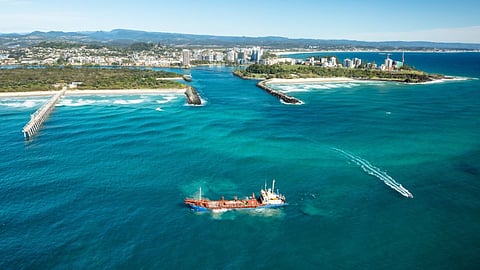

Annual dredging maintenance work to provide a clearer and safer channel into the Tweed River commenced on Friday, March 27.
This work is part of the Tweed Sand Bypassing project, a joint government initiative of the NSW and Queensland Governments.
The project aims to establish and maintain a safe, navigable entrance to the Tweed River, and restore and maintain the coastal sand drift to the beaches on the southern Gold Coast of Queensland.
The project's sand transport system collects sand from the southern side of the Tweed River entrance at Letitia Spit and pumps it under the river to outlets on the northern side.
Dredging is periodically undertaken to manage sand that is naturally accumulated at the Tweed River entrance. The planned dredging campaign involves removing sand from the entrance and depositing it offshore of Snapper Rocks, Duranbah, Bilinga, and Fingal beaches.
Dredging is subject to environmental controls and monitoring, and boaters in the area are advised to exercise caution when using the Tweed River entrance during this time. Boaters are advised to stay up to date by following the relevant marine notices for the area.
“Dredging of the Tweed River entrance supports the long-term viability of the local commercial fishing fleet and assists with safe passage for recreational boaters,” said Darren Wood, Transport for NSW Maritime Acting Executive Director.
“Our aim is to keep the Tweed River entrance navigable and deliver a long-term average of 500,000 cubic metres of sand each year through a combination of sand pumping and dredging to maintain sand supply to the Gold Coast’s southern beaches."
Up to 150,000 cubic metres of sand is planned to be dredged during the upcoming campaign.

