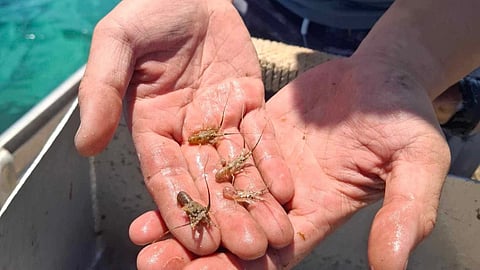

Scientists from the Western Australia Department of Primary Industries and Regional Development (DPIRD) are predicting bumper rock lobster stocks in five years after recording some of the state’s highest puerulus counts on record.
Puerulus is the stage at which lobster larvae have undergone metamorphosis and transform into tiny lobsters that settle onto their new habitat.
The 2025/26 puerulus settlement counts for the northern and southern sectors of the western rock lobster fishery were the best in decades, according to the DPIRD.
WA’s settlement monitoring project started at Seven Mile Beach, north of Dongara, in 1968.
This season, DPIRD’s fisheries scientists conducted monitoring at eight locations between Kalbarri and Cape Mentelle in the Margaret River region, with all sites sampled within five days of the full moon each lunar cycle.
In the north of the western rock lobster fishery, the Port Gregory site has been assessed as being its most productive in the past eight seasons.
In the centre of the fishery, areas like Dongara and Jurien registered very similar settlements over the past decade – slightly below the long-term average.
At Margaret River in the south, scientists recorded the second highest settlement since sampling began at that site in 1984.
DPIRD Principal Research Scientist Simon de Lestang said puerulus started settling on inshore reefs in May and continued through until April the following year, with peak settlement between August and September.
Dr de Lestang said a high puerulus count pointed to very good catch rates in five years when the rock lobster reached legal size.
“The catch rate of western rock lobster between the Capes and off Augusta will be very good based on these results, likely due to a strong Leeuwin Current this season,” Dr de Lestang said.
“Warmer water temperatures are associated with greater settlement success by increasing growth rates and decreasing the length of the larval phase, minimising natural mortality.
“The proportion of puerulus returning to the coast to settle after nine to 11 months at sea not only depends on natural mortality, but also favourable oceanographic conditions that return them to the coast.”
The western rock lobster fishery is quota managed, so with the benefit of good settlements, large amounts of lobster biomass can be maintained for subsequent years as juvenile lobsters from earlier settlements continue to grow.
More information on the western rock lobster settlement is available online here.

